Worde: Daily & Unlimited
- 4.3
- Rating
- 500.00K
- Installs
- Free
- Price
 Analysis by App-foxy
I installed Worde: Daily & Unlimited expecting a quick word puzzle and found a game that is easy to understand within seconds but more revealing after repeated use. It belongs to the word-game category, comes from ViralMedia-MLM, and focuses on guessing six- or seven-letter words. That simple format gives it an immediate first-week appeal: I can open it for a short break, make a few guesses, and stop without learning a complicated ruleset.
The important question, though, is not whether Worde is pleasant for a few sessions. Most daily word games manage that. The better test is whether it deserves a permanent place on a phone after the novelty fades. My answer is cautiously positive. The free entry, daily mode, unlimited play, and multiplayer option give it more staying power than a single-puzzle routine, but the experience still depends heavily on how much repetition I can tolerate.
What the first week feels like
The opening experience is refreshingly direct. The aim is to identify the hidden word through successive guesses, using the feedback from earlier attempts to narrow the possibilities. Because the game centers on six- and seven-letter words, it feels a little more demanding than very short word puzzles while remaining approachable for casual players. I never felt that I needed a tutorial-heavy introduction before starting.
You May Also Like

 Blood Strike: 2.5 Anniversary
Blood Strike’s Loadouts Turn Every Drop Into a Tactical Gamble
A close look at Blood Strike’s custom loadouts: how fast access to signature weapons reshapes its battle royale rhythm, rewards preparation, and narrows the gap between fights.

 Pandora - Music & Podcasts
Pandora’s Music Is Easy to Start, but Harder to Recover
Pandora’s strength is its low-effort path from a seed to a station. Its weak spot is how much confidence it asks you to place in connection, setup, and quiet recovery.

 8 Ball Pool
 Is Built on Rivalries, Rematches, and Routine
A close look at the rivalries, rematches, shared routines, and unanswered safety questions that turn a quick pool match into a persistent mobile community.

 Samsung Music
’s Quiet Strength Is Playing What You Already Own
Its reach comes less from spectacle than from dependable access to a personal library. That simplicity is both the app’s strongest retention engine and its ceiling.

 AccuWeather: Weather Radar
AccuWeather Review: A Quick, Clear Forecast for Everyday Decisions
For everyday plans, the best forecast is the one you can understand quickly. AccuWeather makes rain timing, radar, and local conditions easy to act on, with a few trade-offs.

 Hill Climb Racing
Why Hill Climb Racing Still Turns Crashes Into One More Run
A tiny car, a bumpy hill and one more upgrade: Hill Climb Racing keeps resurfacing because its simple chaos makes every near-miss feel personal.
More From Our News Desk



That accessibility makes it a good companion for small gaps in the day. I can play while waiting for an appointment, during a coffee break, or when I want something more active than scrolling. A typical session does not require a long commitment, and the daily format gives the game a natural stopping point. When I want more, unlimited play prevents the experience from ending after a single attempt.
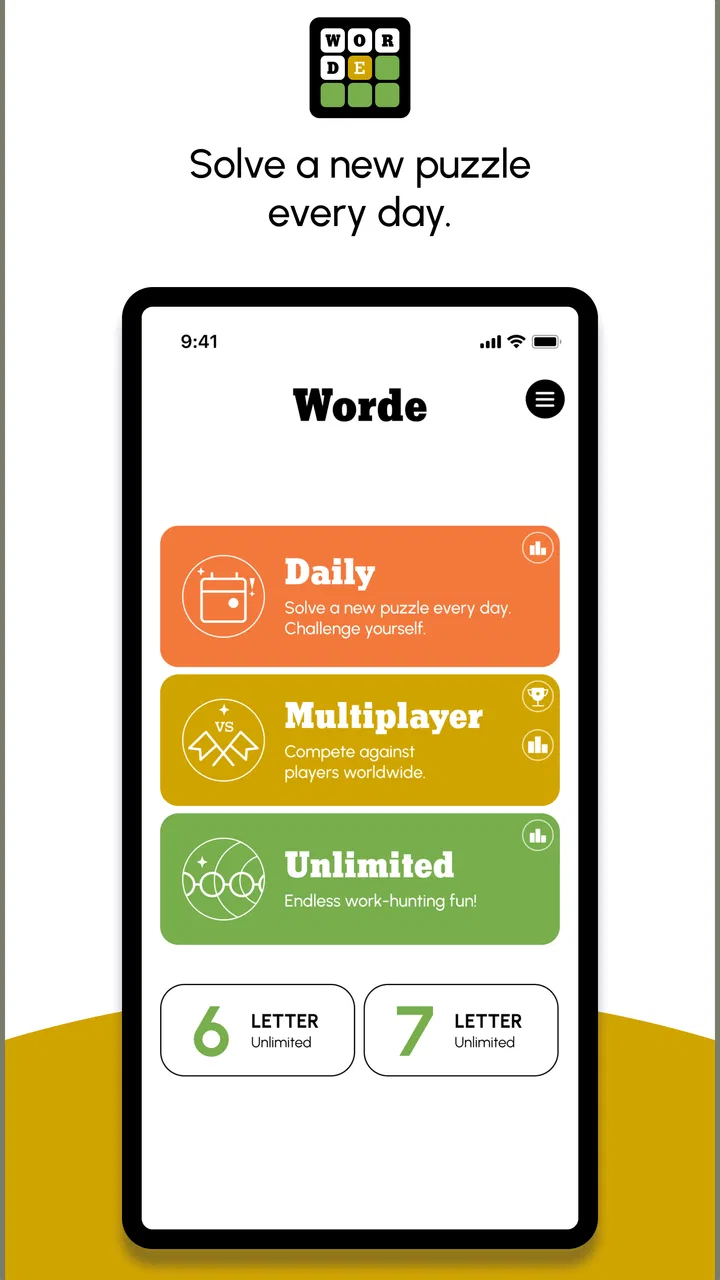
The distinction between daily and unlimited play matters more than it first appears. Daily mode creates a shared rhythm: one puzzle becomes a small personal challenge that I can revisit mentally without immediately burning through a large collection. Unlimited play is better when I am in the mood to practice, experiment, or simply keep solving. Having both options means the game can serve either a ritual or a longer session.
Multiplayer adds another reason to return, especially for people who enjoy comparing word instincts with friends or family. I would not choose this game solely for its social side, but the option changes the tone. A puzzle that feels solitary in daily mode can become a quick challenge to discuss or replay with someone else. The strongest early appeal comes from this flexibility rather than from any single mode.
My practical advice for new players is to treat the first guesses as information-gathering tools instead of attempts to be clever. A guess with varied letters can reveal more useful clues than an obscure word that happens to fit one idea. In six-letter puzzles, this approach helps me test several common sounds and letter positions quickly. With seven-letter words, it becomes even more important because a narrow opening guess can leave too many possibilities unresolved.
Another useful habit is to separate certainty from assumption. When the game indicates that a letter belongs somewhere in the answer, I try not to lock it into the first position that comes to mind. Moving confirmed letters around can expose patterns that are easy to miss when I become attached to an early theory. This is a small change, but it makes the longer puzzles feel less like random guessing.
The game is suitable for an Everyone audience, which matches its straightforward, non-violent word-play format. It is also free to install, so trying both the daily and unlimited approaches does not require an upfront purchase. In-app purchases range from $0.49 to $45.44 per item, so I would pay attention to the purchase screen and decide in advance whether optional spending fits my habits.
On Android, the minimum operating-system requirement is 7.0, which keeps the game accessible to people using older supported devices. The current version is 2.1.11. I would still check that a particular phone runs it comfortably before making it part of a daily routine, especially if the device is old or storage is tight, but the stated software requirement is not demanding by modern standards.
Why the novelty works at first
The first-week hook comes from the balance between recognition and uncertainty. I understand the basic goal immediately, yet every puzzle asks me to make choices with incomplete information. That combination is satisfying because a correct answer feels earned rather than automatic. The six-letter format is approachable enough for a casual start, while seven-letter words provide a noticeable step up when I want a tougher mental workout.
I also like that the game does not need a large time investment to feel worthwhile. A short session can still give me a clear result: I solved the word, improved my approach, or discovered that I need to manage guesses more carefully. That compact feedback loop is one reason word games often fit daily habits better than larger mobile games.
What remains useful after the first month
After the initial excitement settles, Worde’s value depends on variety in how I use it. If I only complete the daily puzzle, the game becomes a small routine. That can be enough for someone who wants a dependable mental break, but it may not satisfy a player looking for constant progression, unlockable goals, or a broader campaign. The unlimited mode is what gives the app a chance to remain relevant beyond the first month.
Unlimited play works particularly well as a practice space. I can use it to test opening strategies, become more comfortable with seven-letter answers, and learn how quickly I start repeating the same guesses. This creates a self-directed improvement loop rather than a formal training system. I decide what to work on, and the next puzzle immediately gives me another opportunity to apply it.
One of my favorite long-term uses is keeping a mental note of recurring mistakes. I often know more letters than I think, but waste a turn by repeating a letter pattern or ignoring an uncomfortable vowel arrangement. Playing several puzzles in a row makes those habits visible. The game becomes more valuable when I treat each failed guess as evidence about my method, not merely as a lost opportunity.
For a household or small group of friends, multiplayer can help prevent the daily mode from becoming too solitary. A quick shared challenge creates a reason to open the app even when I am not especially motivated to play alone. It is also a useful way to make word practice feel social without turning it into a large commitment. Players who prefer private, uninterrupted puzzles may get less from this aspect.
Compared with a traditional crossword, Worde is quicker to enter and easier to fit into a spare minute. A crossword usually rewards broader clue knowledge and a longer sitting, while this game concentrates on deduction from letter feedback. Compared with a word-search game, it asks for more strategic planning and less visual scanning. Compared with a single daily puzzle app, its unlimited and multiplayer modes offer more room to continue, although they can also weaken the special feeling of having one carefully contained challenge.
That comparison points to an important trade-off. The unlimited mode improves replay value, but unlimited access can also encourage shallow repetition. If I rush through puzzles without thinking about why a guess worked or failed, I am mostly consuming the same format rather than developing a stronger skill. I get more lasting value by alternating focused attempts with breaks instead of treating the game like an endless feed.
For an everyday scenario, imagine a commuter who has ten minutes before leaving for work. Daily mode provides a contained challenge that can be finished or paused without derailing the morning. On a quiet evening, the same person can switch to unlimited play and solve several puzzles. If a friend is nearby, multiplayer adds a shared activity. That range is more useful than a game that only works in one setting.
Still, I would not recommend it as the main choice for someone who wants deep vocabulary study. The game can encourage careful letter reasoning, but it is not a substitute for reading, structured language exercises, or a dictionary-based learning tool. It is also not ideal for players who dislike repeated guessing, who prefer visual puzzles, or who need a strong progression system to stay engaged.
How much maintenance the habit requires
The maintenance burden is low in terms of time. There is no need to prepare a long session, remember a complicated control scheme, or manage a large collection of characters and resources. I can return after a break and understand what to do immediately. That simplicity is a genuine advantage for a daily habit because the game rarely creates friction before the puzzle itself begins.
The larger maintenance issue is personal discipline. Daily games can become another notification-like obligation if I decide that every puzzle must be completed at a particular time. I prefer using the daily mode as an invitation rather than a duty. Missing a session should not make the game feel like work. Unlimited play is useful here because it lets me return when I have the energy, but it should not be used to compensate for a routine that has become stressful.
There is also a spending habit to consider. Since the game is free but includes in-app purchases, I would keep the basic experience as the default and avoid buying anything impulsively. The wide range between the smallest and largest listed items makes it especially sensible to review each purchase before confirming it. For me, the game earns its place through the free play options, not through a need to spend money to make the core idea enjoyable.
Device compatibility is another small part of maintenance. The minimum requirement of Android 7.0 makes it possible to use the game on many older phones, but an older operating system does not guarantee that every device will feel equally smooth. If I were installing it on a secondary phone, I would test a few sessions before relying on it as my main daily game. That is ordinary caution rather than a reason to avoid it.
Where fatigue starts to appear
The main source of fatigue is the format itself. Guessing hidden words is satisfying because the rules are focused, but that focus can become narrow after repeated sessions. Once I have played many rounds, the basic sequence of guess, inspect clues, and rearrange letters can feel familiar. Unlimited mode extends the amount of available play, yet it cannot completely remove the repetition built into the design.
Seven-letter words can create a second kind of fatigue. They offer a welcome increase in difficulty, but longer answers may also produce more uncertainty when several plausible arrangements remain. On a day when I want a relaxed break, that extra complexity can feel less rewarding than challenging. I appreciate having the choice, but I would not assume that the longer mode is automatically better for every player.
Daily mode has the opposite risk: its restraint may feel limiting to someone who wants immediate variety. A player who enjoys solving several puzzles in one sitting will naturally spend more time in unlimited play, and that can make the daily mode seem secondary. The best balance is to use daily mode for consistency and unlimited mode for deliberate practice, rather than expecting either one to satisfy every mood.
Multiplayer may also have a limited audience. It is a welcome addition for people who already have someone interested in word games, but it does not automatically create a social community around the app. I would choose it for the possibility of playing with people I know, not because I expect the social option alone to keep me engaged indefinitely.
The rating of 4.3 from around 11 thousand ratings suggests that many players find the overall experience appealing, and the app has passed half a million installs. Those figures indicate a healthy level of interest, but they do not remove the need to judge the format personally. A popular word game can still be a poor fit for someone who needs richer variety or dislikes daily routines. I see the audience response as encouraging context, not a guarantee.
The developer, ViralMedia-MLM, has kept the concept recognizable rather than turning it into an overloaded package. That restraint helps the game remain easy to pick up, but it also means players should not expect the depth of a full word-learning platform. The game’s strength is its compact loop. Its weakness is that the same compact loop can become predictable.
One way I reduce fatigue is to change the purpose of each session. I might play the daily puzzle slowly, using it as a deduction exercise, then use unlimited mode later for quick pattern recognition. Another day, I may focus on avoiding repeated letters or on making opening guesses that cover different vowel sounds. These self-imposed goals keep the experience active without pretending that the game has a larger progression system than it actually does.
I also recommend stopping after a frustrating run instead of chasing a better result immediately. Word puzzles can make a player overconfident: one near-solution encourages another attempt, then another, until the activity feels like a test of patience. A short break often preserves the appeal better than forcing a long session. That is especially true when the goal is a sustainable habit rather than a single impressive streak.
My long-term verdict
After looking past the first-week novelty, I think Worde: Daily & Unlimited earns space on a phone for the right kind of player. It is free to start, simple enough for casual use, and more flexible than a strictly one-puzzle-per-day alternative because it includes unlimited and multiplayer modes. The six- and seven-letter focus gives the game a clear identity, with the longer words offering a meaningful increase in challenge.
I would recommend it to someone who wants a compact daily word game, enjoys deduction more than fast action, and appreciates being able to choose between a contained puzzle and additional practice. It is also a sensible option for households or friends who want a lightweight word challenge they can share. The Everyone rating and modest Android version requirement make it approachable across a broad range of users.
I would skip it if I needed a structured vocabulary course, a large adventure, a deep competitive ladder, or constant visual variety. I would also be cautious about unlimited play if I tend to turn casual games into repetitive chores. In those cases, a crossword app, a language-learning tool, or a more varied puzzle collection may serve better.
My strongest recommendation is to build a flexible routine rather than forcing daily attendance. Use the daily mode when you want a small ritual, switch to unlimited play when you genuinely want more, and use multiplayer only when it adds real enjoyment. Keep an eye on in-app purchases, particularly because individual items can reach $45.44, and remember that the free core is the reason to try the game in the first place.
In the end, the lasting value comes from how thoughtfully you play, not from how many rounds you can consume. Worde provides a clean, repeatable word puzzle with enough modes to remain useful beyond its first impression. It does not completely escape the fatigue of a narrow format, but it gives me practical ways to manage that fatigue. For a short, familiar mental workout that can grow into a modest habit, I would keep it installed.
FAQs for Worde: Daily & Unlimited
01What is Worde: Daily & Unlimited?
Worde: Daily & Unlimited is a word puzzle game designed for both Android and iOS platforms. It offers daily word challenges and unlimited play modes, perfect for those who enjoy testing their vocabulary and problem-solving skills. The game provides a continuous stream of puzzles to keep users engaged.
02Is Worde: Daily & Unlimited free to play?
Yes, Worde: Daily & Unlimited is free to download and play. However, it may offer in-app purchases for additional features, hints, or to remove ads. Users can enjoy the core features without payment, but optional purchases can enhance the experience.
03Does Worde: Daily & Unlimited require an internet connection?
Worde: Daily & Unlimited primarily functions offline, allowing users to enjoy puzzles without an internet connection. However, some features like daily challenges or updates may require connectivity. To access the latest puzzles and updates, a stable internet connection is recommended.
04Can I play Worde: Daily & Unlimited on multiple devices?
Yes, you can play Worde: Daily & Unlimited on multiple devices. By signing in with your account, you can sync your progress across devices. This ensures that you can continue your game seamlessly, whether you're on a smartphone or tablet.
05Are there any accessibility features in Worde: Daily & Unlimited?
Worde: Daily & Unlimited includes several accessibility features to enhance the gaming experience for everyone. These may include adjustable text sizes, color contrast settings, and voice-over support. The game developers are committed to ensuring inclusivity and ease of use for all players.
Pros
- Simple and intuitive interface.
- Unlimited puzzles for endless fun.
- Daily challenges keep it fresh.
- No intrusive ads during gameplay.
- Supports multiple languages.
Cons
- Limited customization options.
- Occasional lag on older devices.
- No multiplayer mode available.
- In-app purchases for hints.
- Requires internet for daily updates.

Worde: Daily & Unlimited
Gallery